Key figures
- Below-normal river flows over 36% of global basin area in 2025 (WMO)
- Global land water storage has been declining since 2014–2016
- Glaciers lost about 1,400 billion tonnes of water between 2023 and 2025
- UN Water Conference: 8–10 December 2026, Abu Dhabi, co-hosted by the UAE and Senegal
Water has a way of making itself noticed only when there is too little or too much of it. According to the World Meteorological Organization’s State of Global Water Resources 2025 report, released in Geneva on September 17, the world is increasingly experiencing both extremes — and steadily losing the natural buffers that once protected people from them.
The report, which draws on data from national weather and hydrological services and on simulations from 13 global hydrological models, covers river flows, groundwater, soil moisture, lakes, snow, glaciers and extreme events. It has grown from three variables when it was first published in 2021 to fifteen today, offering one of the most complete pictures of the planet’s water cycle ever assembled.
The challenge: too little, too much
Rivers had one of their driest years in 35 years of records in 2025, with below-normal flows across more than 36% of global river basin area. For the seventh year in a row, basins with ‘normal’ conditions were a clear minority — between 34% and 38%, compared with an average of 46% between 1991 and 2020. Drought affected major river systems on several continents, reducing water for farms, cities, shipping and hydropower.
At the same time, other regions received too much water. Parts of South Asia experienced higher-than-normal river flows and destructive floods. In each of the past five years, national meteorological and hydrological services around the world have reported record-breaking floods and droughts, and some places have had no time to recover between one disaster and the next. The water cycle, the WMO concludes, has become more erratic and less predictable.
A depleted savings account
The report’s most striking finding concerns the planet’s slow water reserves: groundwater, glaciers, lakes and seasonal snowpack. Unlike rainfall and river flow, which respond to weather within days or weeks, these reserves build up or run down over seasons, decades or longer. Traditionally, they have acted like a savings account — a buffer that carries societies through a bad year so that a single drought does not become a water crisis.
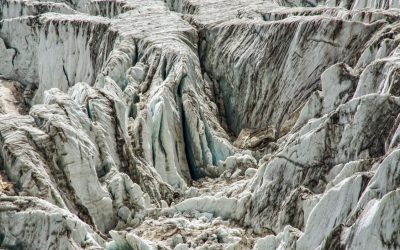
That account is being drawn down. Global terrestrial water storage — the total amount of water held on and under the land — has shown a persistent decline since around 2014–2016. Persistent groundwater deficits were observed between 2022 and 2025 in parts of the Americas, Europe, the Middle East, India, southern Africa and Australia, driven by a combination of drought and over-pumping for irrigation. Glaciers alone lost about 1,400 billion tonnes of water between 2023 and 2025, roughly one-third of all the freshwater that humanity withdraws in a year.
When groundwater is over-pumped, the consequences can be lasting. Wells run dry and must be drilled deeper at greater cost. In coastal areas, seawater seeps into aquifers, making the water salty. In some cities, including parts of Mexico City and Jakarta, the land itself sinks as underground water is removed, damaging buildings and infrastructure and increasing flood risk.
An unequal burden
The human toll of water extremes is concentrated where monitoring is often weakest. Over the past five years, Asia and Africa together accounted for at least half of all recorded water-related extreme events and more than 80% of associated deaths. Yet these regions remain among the least represented in hydrological observation networks. The WMO warns that without better data, countries cannot issue timely warnings or plan effectively.
Globally, billions of people still lack safely managed drinking water or sanitation at home, and the world is off track to meet the UN Sustainable Development Goal of clean water and sanitation for all by 2030. Water scarcity also drives conflict, migration and food insecurity, making it a systemic risk rather than a purely environmental issue.
What can be done
Many water solutions are neither new nor expensive — they simply require investment and political will. Fixing leaks is one of the most effective. Many cities lose a significant share of their treated drinking water through ageing and leaking pipes before it ever reaches a tap. Modern leak detection, using acoustic sensors and pressure management, can recover large volumes at low cost.
Recycling wastewater turns a waste stream into a reliable supply. Singapore treats wastewater to such a high standard that it can be used by industry and even added to drinking water reserves. Israel reuses the majority of its treated wastewater for agriculture. Such approaches reduce pressure on rivers and aquifers and are largely independent of rainfall.
Agriculture accounts for the largest share of freshwater withdrawals worldwide, so improvements on farms matter most. Drip irrigation delivers water directly to plant roots, cutting waste compared with flood irrigation. Soil moisture sensors and weather forecasts help farmers irrigate only when needed. Drought-tolerant crop varieties, cover crops and practices that build soil organic matter help land hold more water.
Nature can be an ally. Protecting and restoring wetlands, forests and floodplains allows landscapes to absorb rainfall, recharge groundwater and release water slowly, reducing both flood peaks and drought impacts. ‘Sponge city’ programs in China and elsewhere use permeable pavements, parks and rain gardens to capture stormwater in cities rather than channelling it away.
Groundwater needs to be managed, not simply mined. Measuring how much water is extracted, setting sustainable limits and actively recharging aquifers during wet periods can rebuild the savings account over time.
Cooperation across borders
Because more than half of the world’s freshwater flows through river basins shared by two or more countries, cooperation is essential. A glacier retreating in one country changes water availability for millions of people downstream in another. The WMO is calling for shared data, common standards and early warning systems that serve entire river basins, not just individual nations.
That message will be front and centre at the 2026 UN Water Conference, co-hosted by the United Arab Emirates and Senegal in Abu Dhabi from December 8 to 10. It will be only the third global UN water conference since 1977, the first led by two countries from the Global South, and the first dedicated to accelerating progress on the goal of water and sanitation for all. Rather than a negotiated treaty, the conference is expected to produce a summary of commitments, and conservation groups are pressing for concrete, measurable outcomes.
What you can do
At home, fixing dripping taps, installing water-efficient fixtures, watering gardens in the early morning and choosing drought-tolerant plants all reduce demand. Supporting local watershed organisations and asking utilities about leak reduction also make a difference.
For most people, climate change will be felt first through water — too much, too little, or too unpredictable. Managing water wisely is therefore one of the most important ways humanity can adapt to a warming world.
Sources
WMO, State of Global Water Resources 2025 (September 17, 2026) and accompanying press materials; UN-Water, 2026 UN Water Conference announcements (2025–2026); IUCN (2026); Reuters (September 2026).