
Smart cities use extensive digital technologies to be as efficient as possible, with the aim of benefiting the environment and improving the quality of life of their inhabitants. The technologies these cities use to optimize their performance are multi-faceted and often connected to support one another and share data. This creates an infrastructure framework able to effectively address urban challenges.
Technologies Used by Smart Cities
Technologies commonly associated with smart cities include autonomous vehicles, artificial intelligence (AI), 5G, and the Internet of Things (IoT). The latter are groups of physical devices (like sensors) that are digitally connected to form a network that exchanges data. In smart cities, the IoT plays a major role in both monitoring and optimizing congestion levels, energy efficiency, and more. Big data – and specifically its planning and management – is also likely to be vital in implementing smart city projects.
Smart Infrastructure
Those with an interest in this field, such as Marc André Pépin, know that smart infrastructure is the foundation of smart cities – it’s the technological and physical backbone on which the city’s services are built. Energy, sanitation, mobility, security services, and telecommunications operate via physical infrastructure connected through data platforms, communication networks, and sensors to integrate and work together.
The key elements of smart city infrastructure are resilient, sustainable energy grids and utilities, waste, water, and environmental management systems, digital governance, cybersecurity, and public services. Mobility networks and intelligent transport systems are also at the heart of smart city infrastructure, which use real-time data to monitor and manage traffic. For example, smart traffic lights help reduce pollution and prevent accidents by adjusting their timing based on the volume of vehicles.
Real-World Smart Cities
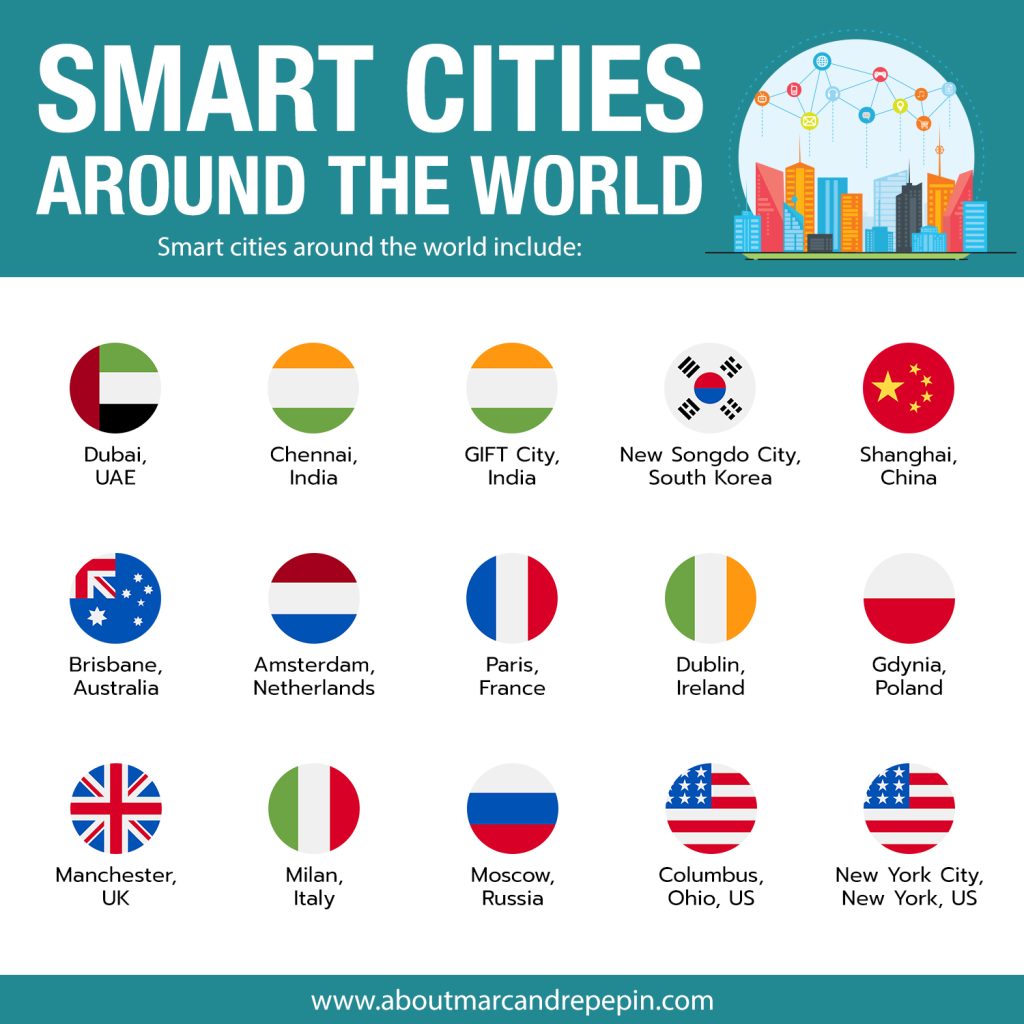
Amsterdam is an example of a European smart city, with its circular economy and sustainable mobility driving urban decisions. There are more than 850,000 bicycles in Amsterdam – which is gradually banning fossil fuel vehicles – which has transformed the city’s traffic into an efficient cycle-pedestrian ecosystem.
Meanwhile, Paris has focused on urban innovation and shared mobility to become one of Europe’s leading smart cities. Sustainable transport is a priority, and there are over 1,800 shared scooters and 20,000 bicycles in the city, which has adopted a “15-minute city” model to bring vital services closer to residents and improve urban livability and quality of life.